


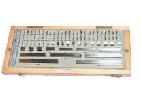
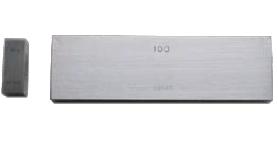
In accordance with the State Verification Scheme, end measures of length (KMD) serve as reference measuring instruments of 1, 2, 3, and 4 orders and as working instruments. They play an important role in transferring the unit of length to lower-level measures in the verification scheme, in verifying measures and instruments, and in adjusting them.
End measures of length are used to measure parts and SIT by comparison. Measures are assembled into sets, which differ from each other in quantity, size, and purpose. The accuracy class is assigned to measures during manufacture or later during verification. The grade is assigned during verification depending on the certification error.
End measures of length are mainly made of steel: steel has proven its reliability for more than 100 years. Steel KMD measures provide high wear resistance along with good adhesion to each other.
Reference KMDs made of steel are carefully processed and remain reliable for many years. However, it is necessary to remember the need for constant and careful protection of steel KMDs from corrosion.
Recently, KMDs have been produced from super-hard ceramics (mainly alumina). Ceramic measures, thanks to the properties of this material, have obvious advantages:
- they are resistant to wear and scratches;
- have minimal thermal conductivity (minimizes temperature error);
- several times lighter (convenient for storage and operation);
- not susceptible to corrosion;
- non-magnetic;
- high hardness (9...9.5 on the 10-point Mohs scale).
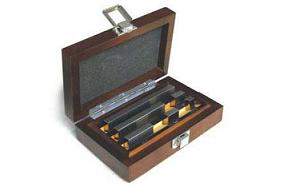
To expand the scope of application of end measures, there are sets of accessories for them that allow you to perform various measurement, control, and marking work.
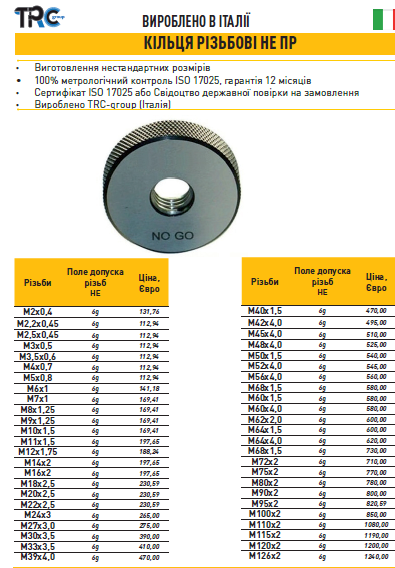
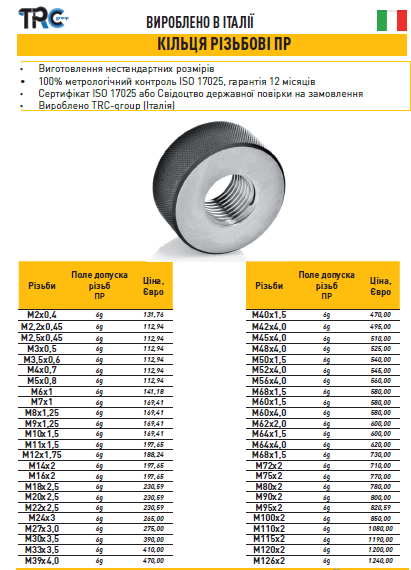
Threaded rings PR NE PR
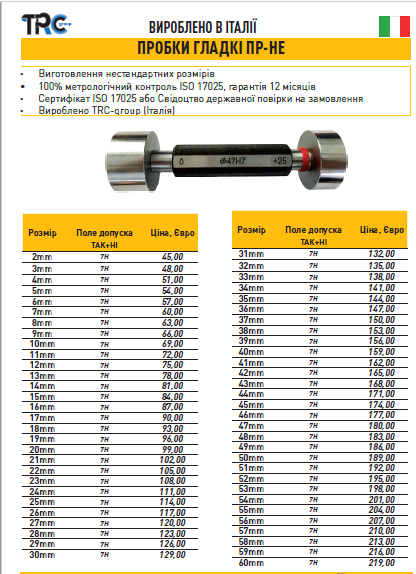
Smooth plugs
 |
 |
 |
 |
 |
 |

 Download PDF document (10 Mb)